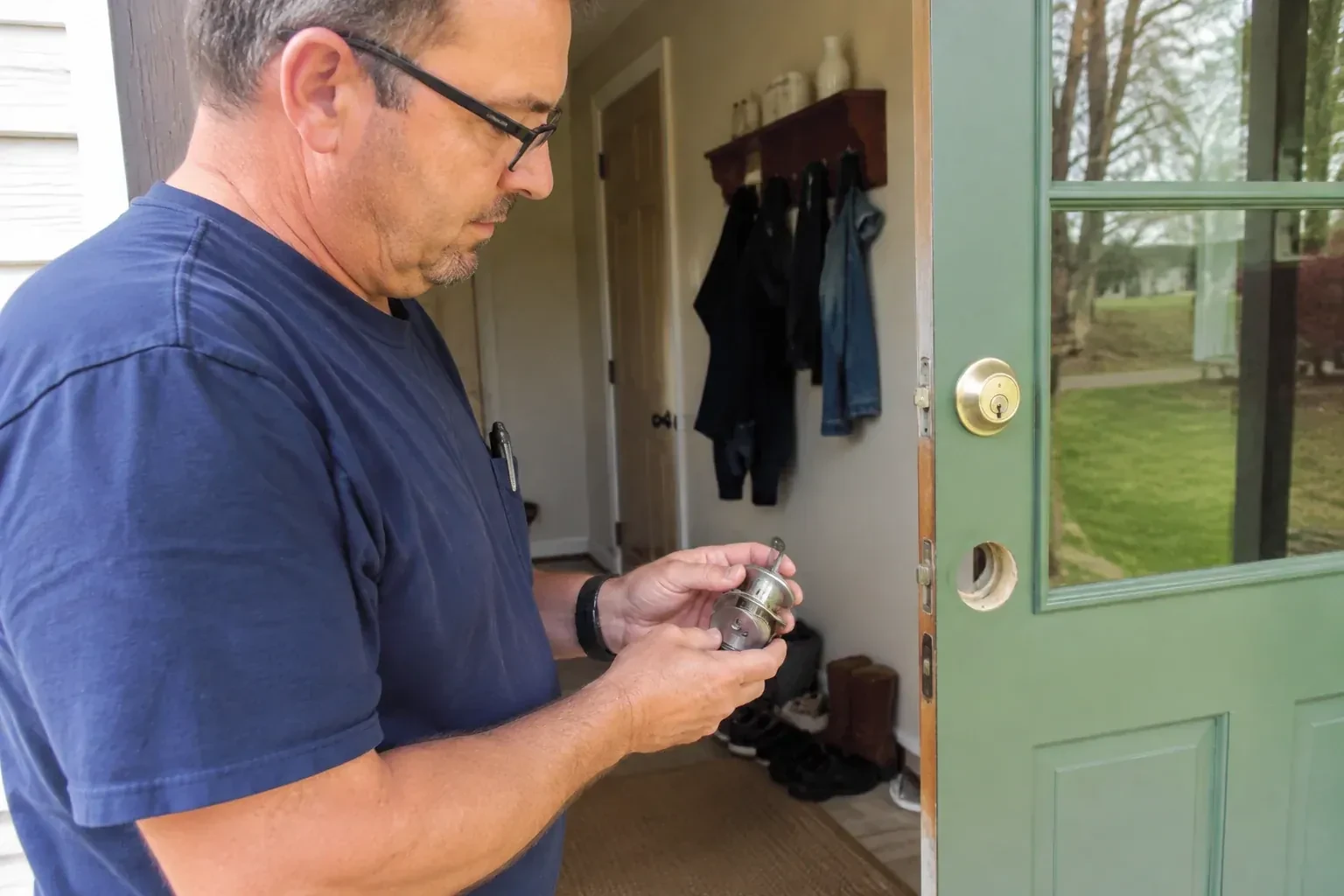
Lockouts · Clarkson
Seized & Jammed Lock Opening in Clarkson
The old mortise lock on the front door of the house turns the key halfway and stops with a dull clunk. It has been getting harder for months, and the brass key is starting to show a bend.
Seized & Jammed Lock Opening
In plain words
The visit runs in a set order. On the phone you describe what the key does: refuses to turn, spins freely, or works only when the door is pushed. That description tells the locksmith what to bring. At the door, identification and your connection to the property are confirmed. The key, keyway, door fit and strike are examined before anything is forced. The opening uses the least disruptive method the condition allows. Then the failed part is serviced or replaced, the door is adjusted if it caused the jam, and the lock is tested open and closed with every key before the locksmith leaves.
How the visit goesThe old mortise lock on the front door of the house turns the key halfway and stops with a dull clunk. It has been getting harder for months, and the brass key is starting to show a bend.
Clarkson
How the visit goes
Which of the three families it belongs to
Every jammed lock falls into one of three groups, and sorting it is the whole diagnosis. A key that enters fully and will not turn points to the cylinder: grit, ice, corrosion, dried lubricant or a plug that has not returned to its neutral position with the shell. A key that turns freely and moves nothing points to the connection behind the cylinder, the tailpiece or cam, or to a broken hub in a mortise case. A key that works only when the door is pushed, pulled or lifted points past the lock entirely to the door and its strike. Each group has its own opening method and its own repair.
Freeing a seized cylinder without forcing it
A plug that will not turn is coaxed, not wrenched. The locksmith flushes the keyway with an electronic contact cleaner to lift out grit and old residue, then applies a penetrating lubricant sparingly, since too much simply carries dirt deeper. The key is worked in small movements, in and out and a few degrees each way, letting the pins settle back into their stacks. If the cylinder cap has loosened, it is snugged so the plug sits square. As the plug begins to move, tension is kept light so nothing inside is bent. Once the door is open, the cylinder is removed for proper cleaning rather than left with lubricant masking the wear.
A door that closes without a fight
If the door was the cause, the hinges, strike and seal have been set so the bolt has room. Keeping it that way is a seasonal habit: each spring and fall, try the lock with the door closed and no pressure on it, and snug the hinge and strike screws if the door has begun to drop. Wood keeps moving with humidity, so a door that swells in August may need a touch on the strike in September. A door that suddenly needs a push to lock is telling you early, while the fix is still a screwdriver and not a seized bolt.
Seized & Jammed Lock Opening
In the van
- Mortise case spring and hub
- Lock de-icer
- Cylinder springs, pins and cap
- Plug follower and repinning kit
- Electronic contact cleaner
What affects the quote
Same fees day, night or weekend
1Matching finish and keyway
A replacement that has to match an unusual finish or a restricted keyway takes a specific part rather than a stock one, and the quote reflects the part.
2The drive to you
Driving time is part of every call, and a property at the end of a long rural road is a different trip from one a few streets over.
3Upgrades you choose on the spot
A keyhole cover, a storm door latch, a reinforced strike or a new deadbolt are optional extras some people add while the locksmith is there, each shown as its own line.
Seized & Jammed Lock Opening: questions
What lubricant should I use afterwards, and how often?
Whatever lubricant and interval the cylinder's manufacturer specifies, applied with a few turns of the key. Stay with that one product, because mixing different lubricants can make a paste. Oil, hinge silicone and general-purpose penetrating sprays are kept out of the keyway. Lock manufacturers describe cleaning the cylinder with an electronic contact cleaner before lubricating, and that is the order the locksmith follows on a service too.
The thumb-turn is stuck from inside and we need that door to get out. What should we do?
Use another exit for now and call. From the inside the fault is usually a bolt pinned by the frame or a bent spindle, both of which the locksmith frees without damage. A main exit door should open from inside without a key or special knowledge, so the repair leaves the door doing exactly that, and if the hardware on it was the wrong type for an exit, a thumb-turn deadbolt is suggested.
Should I spray something into the keyway while I wait?
Better not, unless it is a proper dry lock lubricant. Household oils, general penetrating sprays and hinge silicone thicken inside the cylinder and attract grit, so they buy a day and cost a service later. If the lock is frozen, a lock de-icer is fine; boiling water is not, since it refreezes deeper in. The most useful thing to do while waiting is to stop turning the key, so it does not bend or snap.
Lockout Services
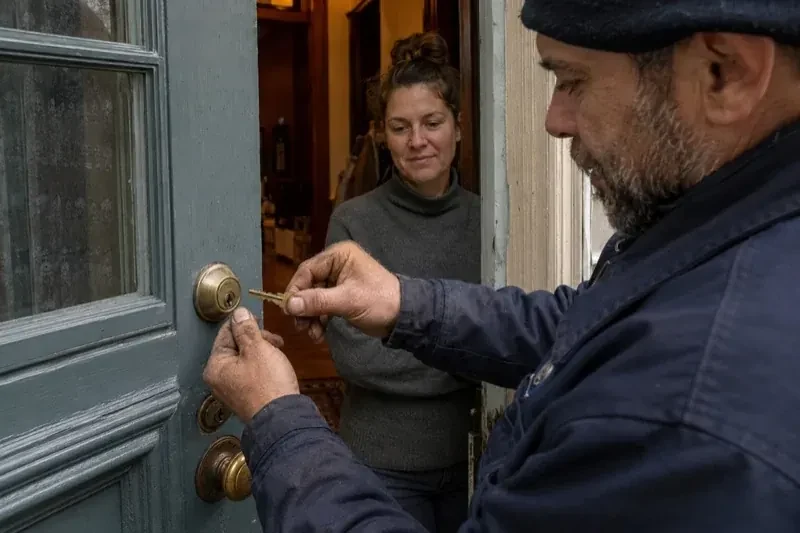
Seized & Jammed Lock Opening near you
Use this list to find the lock service that fits your situation in Clarkson. Openings for lockouts. Rekeys and lock changes for new owners and departing tenants. Deadbolts and high-security hardware for people who want more from their door. Commercial hardware and master keys for businesses. Safes. Keys of every kind.