Commercial · Glen Leven
Panic & Exit Hardware in Glen Leven
The crossbar on the loading-dock door barely returns anymore. Someone has to lean into it with a shoulder, and twice this month it has stuck half-latched, propped by whatever was nearest.
Panic & Exit Hardware
In plain words
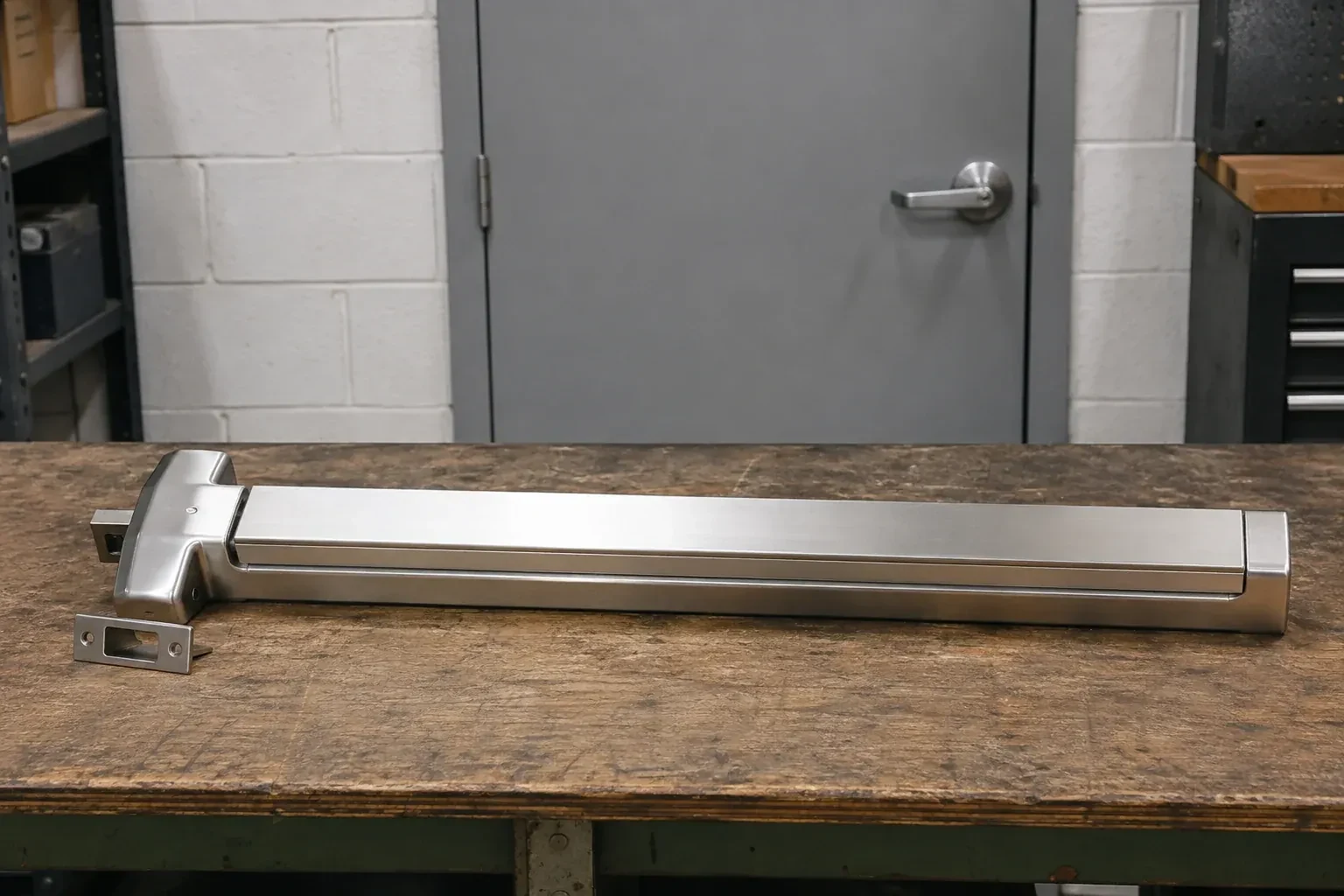
Electrified exit hardware adds a layer without changing the basic behaviour of the door: a person inside can still leave under one motion of the hand, every time. A request-to-exit switch tells an access-control panel that the pushpad or crossbar was actuated, usually paired with a door-position contact so the panel can also tell a normal exit from a forced or propped door. Electric latch retraction lets a fire-rated opening behave like a push-pull door for staff, provided it relatches automatically on a fire-alarm signal, since that kind of door never carries a mechanical dogging function. An alarm module sounds when the device is used.
How the visit goesThe daycare wants the yard gate and the classroom door alarmed so a staff member hears the moment it opens, without turning either into something a child could be shut behind.
Glen Leven
How the visit goes
Confirming why the door needs this hardware
The visit starts with the reason exit hardware is being discussed at all: an occupant load that has crossed a threshold, a fire inspector's note, a new use for the room, or an existing device that has stopped working the way it should. Confirming this first decides everything downstream, because a door required to have a releasing device is treated differently from one where an owner simply wants easier egress. Whoever is responsible for the building is asked directly what triggered the visit, and the answer is recorded alongside the door it concerns before any hardware is chosen.
Recording what was fitted
The visit closes with a written account of the work: which device went on which door, its type and rating, the outside trim fitted, any electrified function added, and the tests the assembly passed. This record travels with the building rather than staying in the locksmith's memory, so a fire inspector, an insurer or a new manager reviewing the space later has a clear account of the exit hardware and when it was fitted.
A maintenance rhythm worth keeping
Exit devices are mechanical hardware and benefit from the same light attention as any other: a periodic check that the release force has not crept up, that the latch still seats fully, and that nothing has been added to the door that would block its exit function. Fire door assemblies carry their own inspection and testing rhythm, and folding the exit hardware into that same routine check keeps the whole opening, not just the lock, in the condition it was fitted in.
Panic & Exit Hardware
In the van
- Strike and reinforcement
- Rated exit device
- Force gauge
- Astragal and mullion hardware
- Signage and labels
What affects the quote
Same fees day, night or weekend
1Removing hardware that should not remain
A padlock, hasp or extra deadbolt found on the door is removed and the resulting holes are filled or covered as part of the same visit, which is its own small task in the quote.
2Electrified functions added
A request-to-exit switch or electric latch retraction adds wiring, a power source and coordination with the building's other systems, while a standalone alarm module can run on its own battery; each is priced alongside the mechanical installation itself.
3Device family required
A rim device suits many single doors with modest work. A mortise or vertical-rod device, or hardware built to a fire-exit listing, takes more preparation and generally more hardware, which the quote reflects.
Panic & Exit Hardware: questions
Who is responsible for keeping the hardware compliant?
The building owner or the party the owner assigns, often a facilities manager, is responsible for keeping exit hardware in working order and for the fire door assembly testing that goes with it. A locksmith installs and services the hardware and can keep records on the owner's behalf, but the ongoing duty to maintain the assembly sits with whoever holds the building.
What is the difference between a rim, mortise and vertical-rod device?
A rim device sits on the surface of the door and suits most single openings, including many tall and fire-rated doors on their own. A mortise device fits into a pocket cut in the door's edge and is chosen where a heavier case or a particular trim style is wanted. A vertical-rod device runs rods to the top, or top and bottom, of the frame, which suits an opening that specifically needs latching at more than one point rather than height by itself.
What is dogging, and can every door have it?
Dogging holds the device's latch retracted so the door works as a simple push-pull for a period, useful during business hours on a busy entrance. It is not available on fire-rated openings, because a fire door must keep an active latch at all times; on those doors, electric latch retraction achieves a similar push-pull convenience without ever leaving the latch mechanically held back.
Commercial Locks
- Master Key System DesignA dental office wants the front desk to lock up at night without ever holding a key to the room…
- Access Control InstallationAnother employee left and the keys never came back.
- Commercial-Grade Lock ReplacementThe key to the office entrance turns with almost no resistance now, and some mornings the deadbolt…
Panic & Exit Hardware near you
The pages linked here cover each lock service available in Glen Leven in the same plain format: the situation it solves, what the locksmith checks first, how he does the work, and how to care for the result. Pick the one that sounds like your door, then reach out to arrange a visit.